

Why are you paying more to acquire traffic only to watch it vanish through a generic, “off-the-shelf” checkout process? With global e-commerce conversion rates hovering between 2.5% and 3.0% in 2026, the gap between market leaders and those struggling with high cart abandonment has never been wider. Learning how to increase e-commerce conversion rate isn’t just about tweaking button colors. It’s about moving beyond template limitations to build a high-performance brand presence that commands attention.
You’ve likely felt the frustration of rising customer acquisition costs eating into your margins while your current site feels static and uninspired. We understand that scaling a business requires more than just maintenance; it requires a transformative journey toward industry leadership. This guide will help you master the data-driven strategies and bespoke design principles required to transform your existing traffic into measurable revenue growth and a superior digital footprint.
We’ll provide a clear roadmap for your long-term growth, covering everything from AI-driven personalization that can generate 40% more revenue to the technical precision of frictionless checkout systems. It’s time to stop settling for standard packages and start building a digital engine designed for precision and scale.
Key Takeaways
- Shift from tactical adjustments to a holistic growth engine that maximizes the efficiency of your entire marketing investment.
- Implement frictionless navigation and a “native app” feel on mobile to meet the high performance expectations of modern shoppers.
- Discover how to increase e-commerce conversion rate by replacing bloated templates with bespoke architecture designed for speed and precision.
- Master the technical standards of Core Web Vitals to secure faster indexing and gain a competitive edge in Google promotion.
- Build a scalable brand presence by adopting a continuous cycle of development and real-time AI personalization.
Defining E-commerce Conversion Rate Optimisation in 2026
Conversion Rate Optimisation (CRO) has evolved from a series of tactical adjustments into a holistic growth engine. In previous years, brands focused on isolated tests like changing button colors or font sizes. Today, high-growth businesses view it as a foundational pillar of their What is Conversion Rate Optimization? strategy. Mastering how to increase e-commerce conversion rate in 2026 requires a shift in perspective. It’s no longer just about the website; it’s about the entire customer journey and how every digital touchpoint contributes to your bottom line.
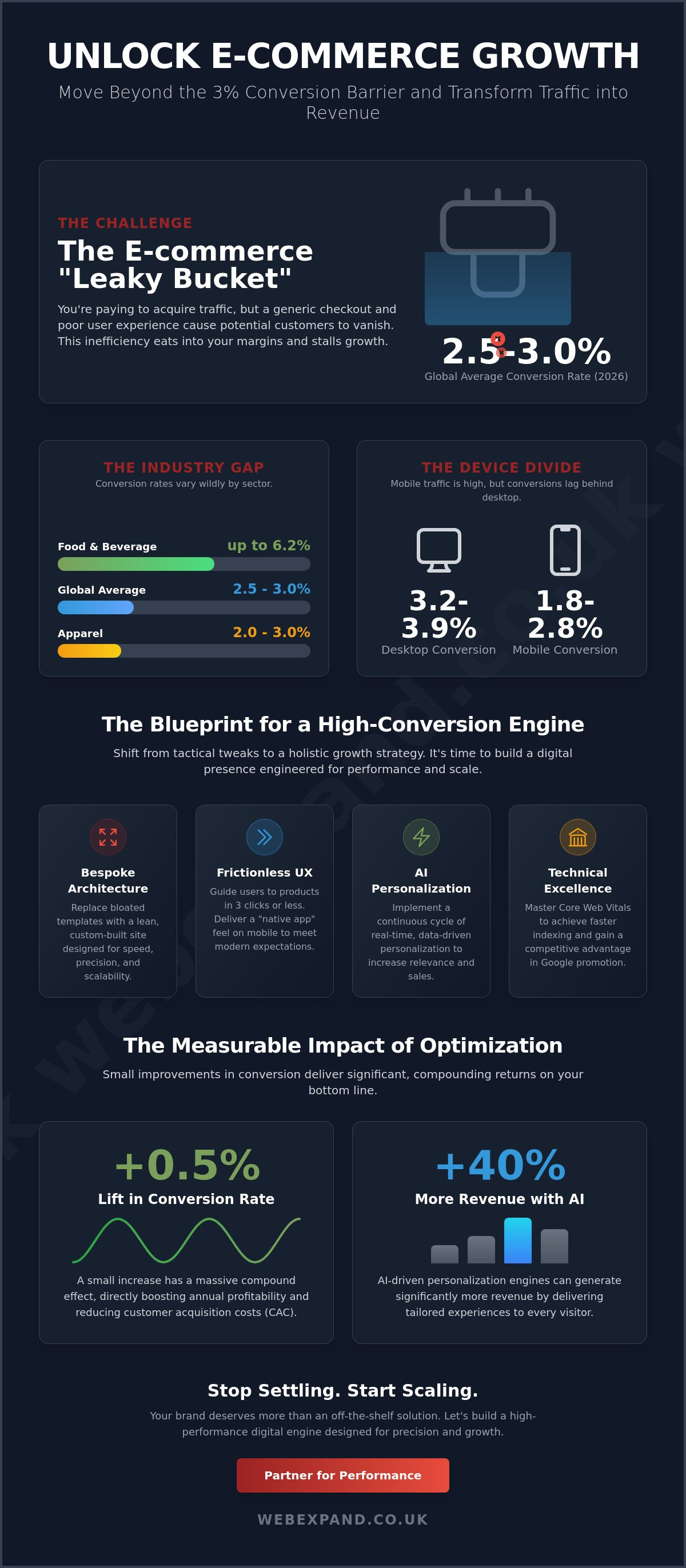
Your conversion rate serves as the ultimate measure of your digital marketing efficiency. If you’re driving thousands of visitors through Google promotion or paid ads but failing to convert them, you’re essentially pouring resources into a leaky bucket. In the current market, the global average e-commerce conversion rate sits between 2.5% and 3.0%. However, benchmarks vary by sector. For instance, the Food & Beverage industry sees rates as high as 6.2%, while Apparel brands typically range between 2.0% and 3.0%.
Calculating your baseline must also move beyond the basic formula of (Conversions / Visitors) x 100. To truly understand your performance, you need to factor in data transparency and segment your traffic. A 2% conversion rate on mobile traffic might be excellent for your niche, while the same rate on desktop could indicate a technical failure. Precision starts with knowing exactly where your revenue is coming from and where it’s being lost. Segment your traffic. Audit your journey. Don’t settle for surface-level math.
The Financial Impact of Precision Optimisation
Increasing your conversion rate directly reduces your reliance on expensive customer acquisition. When your site converts more effectively, your cost per acquisition (CAC) drops, allowing you to scale your how to increase e-commerce conversion rate efforts without inflating your ad budget. A mere 0.5% lift in conversion can have a massive compound effect on your annual profitability. For a business doing seven figures in annual turnover, that small increase represents a significant boost in pure profit that flows directly to the balance sheet. Conversion rate optimization is a transformative journey toward industry leadership.
Setting Measurable Growth Objectives
Success requires a clear distinction between micro-conversions and macro-conversions. While a completed sale is the ultimate macro-goal, micro-conversions like newsletter sign-ups or add-to-carts provide the data needed to refine your strategy. You’ve got to align these goals with your broader organizational scaling plans. We believe in a collaborative approach where data transparency ensures everyone understands the real-time performance shifts. This precision allows us to move quickly from identifying a market challenge to presenting a data-backed solution that delivers rapid results. Your progress is the ultimate measure of our performance.
The UX Foundations of High-Converting E-commerce Stores
High-performance e-commerce isn’t an accident. It’s the result of intentional User Experience (UX) design. While many brands focus on aesthetic flair, the market leaders in 2026 prioritize frictionless utility. If your customers can’t find a specific product in three clicks or fewer, you’ve already lost the sale. This isn’t just about convenience; it’s about respecting your visitor’s time. By organizing your categories to mirror the user’s mental model rather than your internal inventory structure, you create a path of least resistance. Intelligent, predictive site search functionality further accelerates this journey, turning a broad how to increase e-commerce conversion rate strategy into a precise revenue-generating engine.
Mobile-first design is no longer a suggestion. It’s the standard. Consumers now demand a “native app” feel directly within their mobile browser. Despite mobile driving the majority of traffic, conversion rates on these devices often stay between 1.8% and 2.8%, significantly trailing desktop’s 3.2% to 3.9% range. Closing this gap requires a commitment to speed and touch-optimized interfaces. Every element must be accessible, responsive, and immediate. We believe that your mobile presence should be a transformative journey toward industry leadership, not just a scaled-down version of your desktop site.
Visual Hierarchy and Persuasive Design
Templates often force your content into pre-defined boxes, creating a generic “template feel” that erodes consumer trust. To truly dominate your sector, you need a bespoke web design that guides the eye exactly where you want it. High-fidelity imagery and video aren’t just decorations; they’re tools for building product confidence. When a user can see every detail of a product, their hesitation vanishes. We focus on creating layouts that emphasize your primary Call to Action (CTA) without cluttering the interface. This precision ensures your value proposition is never lost in procedural complexity.
Streamlining the Path to Purchase
Reducing cognitive load is essential for conversion. Keep product descriptions punchy and impactful. Don’t overwhelm the buyer with unnecessary choices. The “Golden Rule” for 2026 is simple: guest checkout must be the default. Forcing account creation is a guaranteed way to spike your abandonment rate. Speed is equally critical. Industry data suggests that every 100ms of latency can cost you 7% in conversions. If you’re ready to optimize your digital presence, our e-commerce solutions are built to deliver these high-performance results. We’re here to help you broaden your horizons and achieve measurable growth.
Bespoke Architecture vs. Templates: The Conversion Performance Gap
Many businesses start with off-the-shelf templates because they’re convenient and cost-effective in the short term. However, scaling a brand to dominate its sector requires moving beyond these pre-packaged constraints. Templates often suffer from “code bloat,” which is a collection of unnecessary scripts and styles designed to make the theme work for thousands of different users. Since we’ve already established that even a 100ms delay can significantly impact your revenue, choosing a bespoke architecture is a critical step in learning how to increase e-commerce conversion rate. By stripping away the fluff, you create a lean, high-performance engine that prioritizes speed and user intent.
Bespoke builds also offer a distinct advantage for Google promotion. Clean, semantic code allows search engine crawlers to index your site more efficiently. When your site architecture is built from the ground up, you eliminate the technical hurdles that often trap template-based stores on the second page of search results. This precision ensures your digital presence is optimized for both users and algorithms alike. It’s a strategic approach that turns your website into a competitive asset rather than a generic storefront.
Customization without compromise allows you to build features that serve your specific business logic. Instead of trying to force your operations into a template’s limited functionality, you can design a system that mirrors your unique workflow. Bespoke e-commerce solutions are also inherently more adaptable. As technology shifts or your business grows, you can update specific modules without the risk of breaking the entire system. This flexibility allows you to stay ahead of industry trends and protect your stakeholders’ interests over the long term.
Trust Signals and Brand Authority
Trust isn’t built by slapping a generic padlock icon in your footer. It’s established through a professional, cohesive digital presence that signals reliability and transparency. Bespoke design is the foundation of high-performance growth engines. By integrating social proof, reviews, and testimonials naturally into the UI, you create a seamless experience that validates the customer’s choice without disrupting their journey. High-value customers can spot a “cookie-cutter” site instantly; a tailored solution proves you’re an authority in your field.
Custom Functionality for Niche Markets
Standard features often fall short for businesses in niche markets. If your product requires a complex configurator, a bespoke pricing calculator, or a unique subscription model, templates simply won’t cut it. We specialize in building e-commerce solutions that bridge the gap between your front-end store and complex backend ERP systems. This level of technical integration ensures your operations run smoothly while providing a superior experience for your customers. It’s about broadening your horizons and removing the technical ceilings that limit your potential. Your progress is the ultimate measure of our performance, and we’re committed to delivering results that move the needle on your revenue.
Technical Optimisation and AI-Driven Personalisation
Technical precision is the invisible driver of growth. While design captures attention, your underlying infrastructure determines whether that attention converts into revenue. Mastering how to increase e-commerce conversion rate in 2026 requires a deep commitment to Core Web Vitals. Largest Contentful Paint (LCP), First Input Delay (FID), and Cumulative Layout Shift (CLS) are no longer just developer jargon. They are the primary metrics Google uses to judge your site’s health and user experience. If your CLS causes elements to jump as they load, you aren’t just annoying users; you’re actively destroying trust at the most critical moment of the journey.
The rise of AI has redefined the standard for customer engagement. Research indicates that AI-powered personalisation can generate 40% more revenue for businesses. By delivering unique product recommendations in real-time, you create a hyper-personalised shopping experience that feels bespoke to every individual. In fact, AI-driven recommendations can increase revenue by up to 300%. This moves beyond simple “customers also bought” lists. It’s about using machine learning to understand intent and trigger the right incentive at the perfect time through dynamic pricing and offer engines. We believe in moving from “gut feeling” to a rigorous, data-backed experimentation programme that yields measurable results.
The 2026 Speed Standard
Implementing server-side rendering and edge computing is essential for achieving near-instant load times. We focus on optimising the “Critical Path” to ensure your most important elements load first, keeping users engaged from the first millisecond. This level of technical precision is a core part of what makes a good business website in today’s competitive landscape. It’s about building a digital engine that performs under pressure and scales alongside your ambitions. Precision in your hosting and code structure is the bedrock of your digital presence.
Automated Conversion Recovery
Automated conversion recovery has moved beyond basic abandoned cart emails. We now leverage multi-channel retargeting across SMS, social media, and email to bring shoppers back into the fold. Exit-intent technology should add value, perhaps offering a personalised recommendation or a time-sensitive incentive, rather than just being an annoyance. By using machine learning to predict and prevent customer churn before it happens, you protect your market share and maximise the lifetime value of every user. If you’re ready to deploy these advanced tools, our e-commerce solutions provide the technical foundation you need to dominate your sector. We’re here to help you broaden your horizons and turn technical complexity into a clear competitive advantage.
Partnering for Performance: Building Your Conversion Growth Engine
Mastering how to increase e-commerce conversion rate isn’t a destination you reach and then forget. It’s a continuous cycle of development that requires constant attention to data, consumer behavior, and technological shifts. In an environment where privacy regulations and AI capabilities evolve monthly, your strategy needs to be as dynamic as the market itself. We don’t believe in one-time fixes or “set and forget” templates. Instead, we provide a framework for long-term digital growth that adapts as your business scales and dominates its sector.
Technical complexity can often feel like a barrier to progress. That’s why we prioritize jargon-free, actionable advice. You don’t need to be an expert in server-side rendering or edge computing to see the value in a faster, more persuasive website. You need a partner who can translate those technical requirements into measurable financial performance. With over 20 years of expertise, Webexpand acts as your strategic guide. We protect your interests by staying ahead of industry trends, ensuring that your value proposition is never lost in procedural complexity. When you’re evaluating how to increase e-commerce conversion rate, you’re really looking at how to build a more resilient, high-performance brand.
The Webexpand Approach to E-commerce Dominance
Our commitment is centered on measurable outcomes and financial precision. We don’t just build websites; we engineer growth engines designed for scale. Our bespoke design and SEO services work in tandem to ensure your brand doesn’t just look superior but performs at the highest level in search results. The first step in this journey is identifying the hidden “conversion killers” on your current site. Whether it’s code bloat slowing down your mobile experience or a checkout process that creates unnecessary friction, we find the bottlenecks and remove them with surgical precision.
Broadening Your Horizons with Strategic Partnership
Broadening your horizons means transitioning from a local player to an industry leader through digital expansion. This journey requires moving beyond a simple service provider relationship to a strategic growth partnership built on transparency and reliability. We move quickly from identifying a market challenge to presenting a data-backed solution, creating a sense of momentum that mirrors the fast-paced nature of the professional landscape. We’re deeply invested in your data, but we’re equally focused on the human element of your business development. Your progress is the ultimate measure of our performance.
Ready to scale? Partner with Webexpand for a bespoke e-commerce growth engine.
Secure Your Industry Leadership with Precision Growth
Scaling a brand in 2026 requires more than just traffic. It demands a commitment to technical precision and bespoke architecture that generic templates simply cannot match. By mastering how to increase e-commerce conversion rate, you’ve transitioned from tactical adjustments to a holistic growth engine. You now understand that high-performance results are built on the foundations of clean code, AI-driven personalization, and a user experience that prioritizes speed and trust above all else.
Since our establishment in 2004, we’ve provided the authoritative, results-driven strategic partnership necessary to navigate a rapidly shifting digital landscape. Our 20+ years of digital expertise in bespoke web design ensures that your value proposition is never lost in procedural complexity. We’re here to help you move beyond the limitations of standard packages and embrace a customized approach that protects your interests and drives measurable financial performance. The journey toward industry leadership starts with a single, data-backed step.
Broaden your horizons and scale your e-commerce revenue with Webexpand. We’re ready to collaborate on your transformative journey toward measurable growth. Your progress is the ultimate measure of our own success.
Frequently Asked Questions
What is a good e-commerce conversion rate in the UK for 2026?
A good conversion rate in the UK typically falls between 2.5% and 3.0% for 2026. However, your industry benchmark is the truer measure of success. Food and beverage brands often see rates above 5%, while apparel and luxury sectors typically aim for 2.0% to 3.0%. We focus on helping you exceed these averages by refining your digital presence to meet specific audience expectations.
How long does it take to see results from conversion rate optimisation?
You’ll often see measurable improvements in site speed and engagement within the first 30 to 60 days of implementing technical changes. While structural fixes like hosting upgrades or code optimization deliver rapid results, behavioral testing is a continuous cycle of development. We treat this as a long-term strategic partnership where iterative improvements compound to drive sustainable revenue growth over several months.
Is bespoke web design really better for conversion than Shopify or WooCommerce?
Bespoke website design provides a superior foundation for growth by eliminating the code bloat inherent in standard templates. While off-the-shelf platforms are functional, they often restrict your ability to build a truly frictionless user journey. A tailored solution allows us to engineer every element around your specific business logic, ensuring your site remains a high-performance engine that converts at a higher rate.
How do Core Web Vitals impact my e-commerce sales?
Core Web Vitals directly affect your sales by determining how quickly and smoothly your site loads for potential buyers. High Cumulative Layout Shift (CLS) scores cause elements to jump, which frustrates users and leads to immediate abandonment. Optimising these metrics is a critical step when learning how to increase e-commerce conversion rate, as it ensures a stable and professional shopping experience.
Can AI personalisation actually increase my revenue?
AI personalisation is a powerful driver of financial performance, with the potential to generate 40% more revenue for businesses that implement it correctly. By delivering real-time product recommendations tailored to individual intent, you can see revenue increases of up to 300%. It transforms the generic shopping experience into a bespoke journey, significantly reducing the gap between browsing and buying.
What are the most common conversion killers on modern e-commerce sites?
The most frequent conversion killers include slow load times, forced account creation, and a lack of mobile optimization. If your mobile site doesn’t offer a native app feel, you’re likely losing a significant portion of your traffic. We identify these hidden bottlenecks through rigorous data analysis and remove them to ensure your path to purchase remains as frictionless as possible.
How much should I invest in CRO compared to my advertising budget?
We recommend balancing your budget to ensure you aren’t overspending on acquisition while neglecting how to increase e-commerce conversion rate. Pouring money into Google promotion is inefficient if your website can’t convert that traffic. Many ambitious brands now allocate a significant portion of their digital spend to optimization to lower their cost per acquisition and maximize their total return on investment.
How do I calculate my e-commerce conversion rate correctly?
The standard calculation is your total number of transactions divided by total unique visitors, multiplied by 100. For true precision, you must segment this data by traffic source, device type, and location. This granular approach allows us to identify specific market challenges and present data-backed solutions that move the needle on your revenue. We believe transparency in data is the only way to measure real-world success.