

60% of U.S. adults now use AI tools to find information, yet many businesses still treat their digital presence like a static billboard. You’ve likely spent months perfecting your bespoke website design, only to find yourself staring at a flat traffic graph. It’s frustrating to invest in high-end e-commerce solutions and then feel lost when faced with the technical complexities of GA4 or Google Search Console. You aren’t alone in wondering if the effort will ever translate into measurable financial performance.
We’re going to transform your new site from a quiet digital brochure into a high-performance growth engine. This strategic framework clarifies exactly what to do after launching a new website to secure industry leadership. You’ll gain a prioritized checklist for ranking on Google quickly and a roadmap for measuring success using the latest May 2026 data. We’ll explore how to leverage the new AI Assistant traffic channel and ensure your brand reaches its full potential through precision SEO and strategic Google promotion.
Key Takeaways
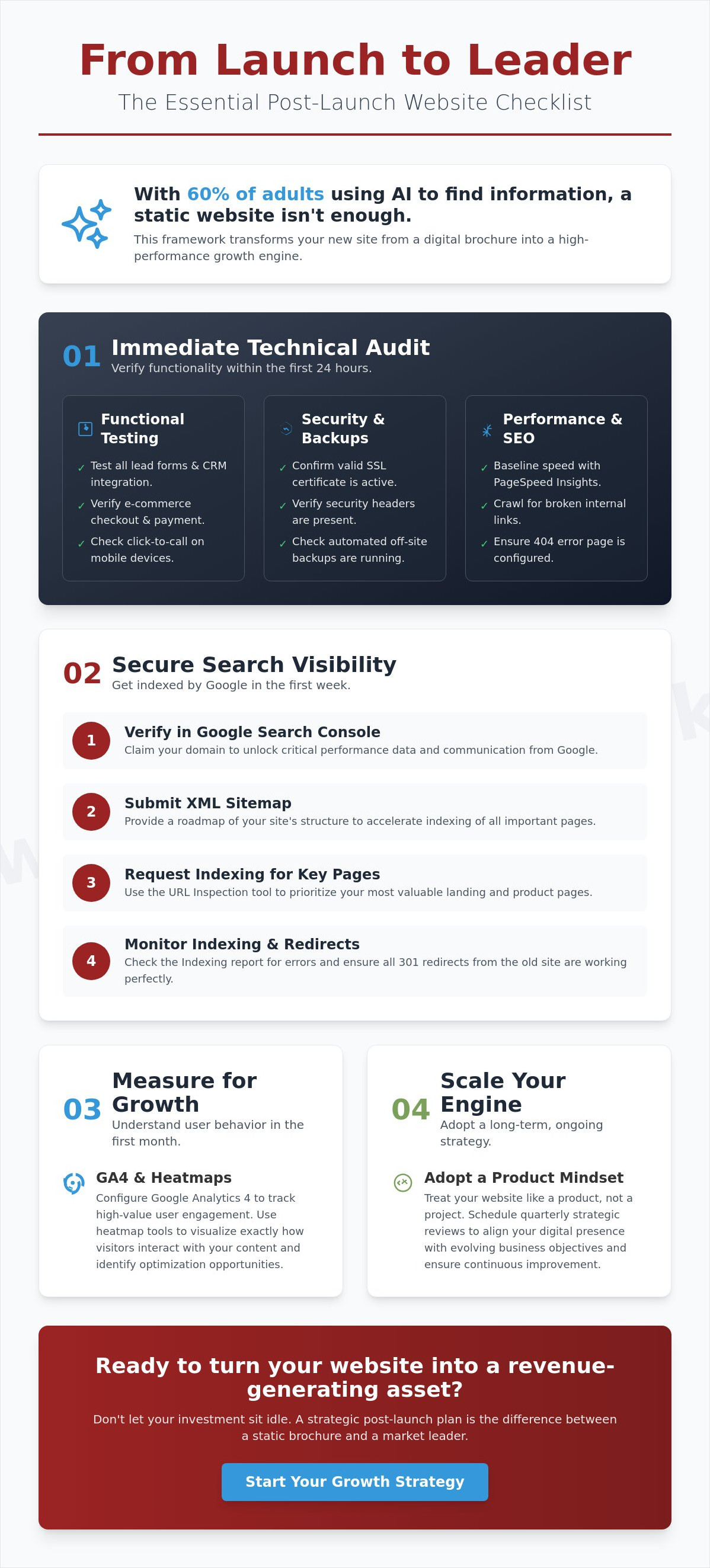
- Conduct a live technical audit to ensure your lead generation forms and e-commerce checkout processes function flawlessly post-migration.
- Submit an updated XML sitemap to Google Search Console to accelerate indexing and build immediate search engine visibility.
- Master the essential steps of what to do after launching a new website to transition from a static brochure to a results-driven growth engine.
- Configure GA4 to track high-value user engagement and utilize heatmap tools to visualize how visitors interact with your content.
- Transition to a product mindset by scheduling quarterly strategic reviews that align your digital presence with evolving business objectives.
Validating the Launch: The Immediate Technical Audit
The moment your site goes live, the clock starts ticking. While the design phase is over, the operational phase begins with a rigorous technical audit. Many businesses make the mistake of assuming that if it worked on the staging server, it will work in the wild. This isn’t always the case. Server configurations, DNS propagation, and caching layers can all introduce unexpected bugs. Understanding what to do after launching a new website starts with verifying that your investment is actually accessible and secure for every visitor.
Functional Testing and Lead Capture
Your conversion points are the lifeblood of your business growth. We recommend submitting test enquiries through every single form on the site. Don’t just check if the form sends. Verify that the email actually arrives in your inbox and that the data maps correctly to your CRM. For brands utilizing advanced e-commerce solutions, checking the end-to-end checkout process is mandatory. You need to know that payment gateways are live and “Thank You” pages are triggering the correct conversion pixels. Mobile users expect seamless interaction. Test your click-to-call buttons and navigation menus on multiple physical devices to catch layout shifts that automated tools might miss.
Security and Performance Verification
Security is a non-negotiable pillar of a professional digital presence. Confirm your SSL certificate is valid and that security headers are active to protect user data from day one. This is especially critical for maintaining trust in a landscape where digital accessibility lawsuits increased by 102% from 2020 to 2025. Your website hosting should include automated, off-site backup schedules that are already running. Performance is another key metric. Use tools like PageSpeed Insights to establish a baseline. Slow load times don’t just frustrate users. They actively hinder your search engine optimization (SEO) efforts by signaling poor quality to Google. Finally, crawl your site to ensure all internal links are functional and that your 404 error page is properly configured to guide lost users back to your core content. This proactive approach is exactly what to do after launching a new website to protect your stakeholders’ interests.
Securing Search Visibility: The SEO Foundations
Indexing is the gateway to growth. Without it, your site doesn’t exist in the digital marketplace. This technical process involves Google discovering, crawling, and adding your pages to its massive database. When you’re deciding what to do after launching a new website, your first priority is ensuring search spiders can access and interpret your content without friction. A site that isn’t indexed cannot generate revenue. While the technical audit verified that your site functions for humans, this phase ensures it communicates effectively with search engines.
Visibility doesn’t happen by accident. It requires a deliberate setup of technical tools and a clear understanding of how search engines perceive your new structure. We move beyond the basics to ensure your site is built for the AI-influenced search environment of 2026. This involves balancing technical precision with authoritative content that meets modern E-E-A-T standards. If you want to ensure your strategy is robust from day one, our Search Engine Optimisation (SEO) experts can help you navigate these initial hurdles.
Google Search Console and Sitemap Submission
Verification is your first step toward search dominance. Claim and verify your domain in Google Search Console to unlock the data you need for informed decision-making. Once verified, submit your sitemap.xml file immediately. This file acts as a roadmap for search engines, highlighting your most important pages and their relationship to one another. For high-priority landing pages or new e-commerce solutions, use the URL Inspection tool to request manual indexing. This can significantly reduce the time it takes for your best content to appear in search results. Monitor the Indexing report weekly during the first month to identify any crawl errors or blocked pages that could stifle your progress.
Monitoring Redirects and Technical SEO
If your new site replaces an older version, your 301 redirects must be perfect. Mapping old URLs to their new counterparts preserves the authority you’ve built over years. A single broken link can lead to a ranking drop that takes months to recover. Check your robots.txt file to ensure you aren’t accidentally blocking search spiders from crawling your core pages. This is a common post-launch error that can halt your search engine optimization (SEO) momentum before it even begins.
Precision matters in your metadata. Audit your
Driving Traffic: Strategic Content and Promotion
Your website is now live, but a digital presence without traffic is just a silent storefront. The next phase of your journey involves shifting from a builder mindset to a promoter mindset. Knowing what to do after launching a new website requires a dual-track approach. You must build long-term authority through content while securing immediate visibility through strategic promotion. Waiting for organic growth alone is a luxury your business can’t afford if you want to dominate your sector quickly.
We focus on precision. Every visitor should be a potential lead. To achieve this, you need a distribution strategy that mirrors the fast-paced nature of the 2026 digital landscape. This means moving beyond simple blog posts and embracing a comprehensive ecosystem of paid, owned, and earned media.
Content Marketing for Authority
Content is the bridge between your brand and your audience’s challenges. You must develop a content calendar that targets the specific pain points your customers face daily. Start by defining your niche expertise in a single, punchy sentence. This clarity guides every guide and article you produce. When researching topics, focus on high-value keywords that align with what makes a good business website in 2026. Consider these strategic content pillars:
- Evergreen Guides: Create deep-dive resources that solve complex industry problems.
- AI-Optimized Content: With 60% of U.S. adults now using AI tools for information searching, your writing must be authoritative enough for AI assistants to cite.
- First-Party Data Insights: Share original research or case studies that only your business can provide.
Amplification and Paid Promotion
Organic SEO is a marathon, but you often need a sprint to generate initial momentum. This is where a targeted Google Promotion campaign becomes invaluable. By bidding on high-intent search terms, you bypass the traditional ranking timeline and place your brand in front of users ready to convert. We recommend using SEO services Kent strategies to ensure your paid and organic efforts work in harmony. This unified approach protects your investment and ensures no lead falls through the cracks.
Don’t ignore the power of your professional network. Share your launch story on LinkedIn to foster a sense of shared success. This drives referral traffic and builds early brand recognition. To maximize this traffic, implement a remarketing pixel immediately. Since many visitors aren’t ready to buy on their first visit, staying top-of-mind is essential for long-term financial performance. Pair this with a centralized email marketing list to nurture those leads who need more time. This proactive stance is exactly what to do after launching a new website to ensure your digital presence is a transformative journey toward industry leadership.
Measuring Success: GA4 and User Behaviour Analysis
Data is the heartbeat of a high-performance growth engine. Many brands make the mistake of treating Conversion Rate Optimisation (CRO) as a late-stage task for next year. In reality, understanding what to do after launching a new website requires immediate analytical oversight. You must move from guessing how users feel to knowing exactly how they behave. Waiting six months to look at your data is a recipe for missed revenue and stagnant growth. We prioritize precision, ensuring every click is a data point that informs your next strategic move.
Success isn’t measured by traffic alone. It’s measured by how that traffic moves through your funnel. By analyzing user behavior early, you can identify and remove friction points before they impact your financial performance. This proactive stance separates industry leaders from those who simply exist online.
Conversion Tracking and GA4 Calibration
Hits are vanity metrics. We focus on meaningful engagement. Configure Google Analytics 4 (GA4) to track custom events like button clicks, video plays, and file downloads. This precision allows you to see which elements actually contribute to your organizational growth. Create a dedicated dashboard that highlights your most critical Key Performance Indicators (KPIs). Finally, ensure your data is clean by excluding internal IP addresses. Your team’s frequent visits shouldn’t skew the results of your strategic analysis. Clean data leads to confident decisions.
Identifying Friction Points via Heatmaps
Numbers tell you what happened, but heatmaps tell you why. Install tools like Hotjar to visualize where users click and how far they scroll. If your primary Call to Action (CTA) is buried below the fold, a scroll map will reveal that only a fraction of your audience even sees it. Watch session recordings to witness the human element of your digital presence. You might find that a specific form field or navigation link causes frustration. These insights are vital for making iterative improvements to your bespoke web design. Using visual data helps you refine the user experience without relying on guesswork.
Don’t ignore the technical health of your site as it scales. Use the Path Exploration report in GA4 to identify exactly where users drop off in your sales funnel. Is there a specific page acting as a barrier? Combine this with a rigorous monitor of Core Web Vitals to ensure your site meets Google’s 2026 performance standards. If your site doesn’t load quickly or shifts unexpectedly, your search rankings will suffer regardless of your content quality. If you want to ensure your site is built for long-term dominance, our bespoke website design team can help you calibrate your platform for maximum impact.
Scaling Your Growth Engine: Long-Term Strategic Evolution
A successful launch represents the start of a transformative journey, not its conclusion. To dominate your sector, you must transition from a “project” mindset to a “product” mindset. A project has a fixed end date, but a high-performance digital product requires continuous improvement to remain competitive. Knowing what to do after launching a new website means treating your digital presence as a living asset that requires precise, ongoing calibration. We recommend scheduling quarterly strategic reviews to ensure your site remains perfectly aligned with your evolving business goals and financial performance targets.
Success in 2026 demands agility. Market shifts happen rapidly, and your growth engine must adapt. This involves investing in digital marketing Kent strategies that leverage first-party data and modern search trends. Reliability is the foundation of this growth. You must maintain a secure, high-performance website hosting environment to ensure 99.9% uptime. If your site is offline or sluggish, your strategic efforts in promotion and content will fail to deliver a return on investment.
Iterative Design and A/B Testing
Data-backed decisions should drive your design evolution. Use the insights gathered from your heatmaps and GA4 reports to run A/B tests on different headlines and CTA placements. Incremental gains in your conversion rate can lead to significant revenue growth over time. You should also update your imagery and messaging regularly. This keeps the site feeling fresh for returning visitors and ensures your value proposition reflects current market needs. By refining your user journeys based on the data collected in the first 90 days, you remove the guesswork from your digital strategy.
The Role of Ongoing SEO and Support
Search engines favor sites that demonstrate consistent authority and technical excellence. Partnering with an ecommerce website developers London team allows you to scale your technical infrastructure as your traffic grows. This partnership ensures your site can handle increased transaction volumes without compromising speed. Regular audits of your backlink profile are equally essential. High domain authority is built on trust, and you must proactively manage your link profile to protect your rankings.
Stay ahead of technological shifts by integrating AI-driven search features into your site. With 60% of adults now using AI tools for information, your content must be structured to be easily parsed by these systems. This forward-thinking approach ensures you aren’t just reacting to the market, but actively shaping your position as an industry leader. This long-term commitment to excellence is exactly what to do after launching a new website to ensure your brand’s progress remains the ultimate measure of success.
Master Your Post-Launch Evolution
A website launch marks the start of your journey toward industry leadership. Success requires a shift from technical setup to strategic optimization. A robust technical foundation and immediate search indexing provide the necessary groundwork. True scaling comes from analyzing real user behavior and iterating based on data-backed performance. Knowing what to do after launching a new website separates static digital brochures from dynamic, revenue-generating engines.
We’ve been guiding businesses through this transformative process since 2004. As specialists in bespoke web design and SEO, we provide the technical expertise and strategic vision needed to dominate your sector. Don’t let your digital investment sit idle while competitors move ahead. We act as your expert guide for business scaling, ensuring your digital presence delivers measurable results.
Partner with Webexpand to scale your digital growth engine. Your path to industry dominance is clear, and we’re ready to help you broaden your horizons.
Frequently Asked Questions
How long does it take for a new website to rank on Google?
Ranking typically takes between three and six months of consistent effort. While Google might index your pages within days, achieving top positions requires building authority and trust. This timeframe varies based on your industry competition and the quality of your search engine optimisation (SEO) strategy. Precision in your initial setup helps accelerate this process and ensures you don’t waste valuable time during your growth journey.
Why am I not seeing any traffic to my new website yet?
Zero traffic immediately after launch is common because search engines haven’t fully indexed your pages or established your brand’s authority. Without active Google Promotion or social media amplification, your site remains invisible to your target audience. You must proactively drive initial visitors to signal to search engines that your content is valuable. This activity helps build the momentum needed for long-term organic growth and visibility.
Do I really need Google Analytics 4 if I have a small business?
GA4 is non-negotiable for any business ready to scale and dominate its sector. It provides the data needed to understand user behavior, including the feature released on May 13, 2026, for measuring traffic from AI assistants. This insight is critical for deciding what to do after launching a new website to maximize your financial performance. It ensures your digital presence is grounded in measurable outcomes rather than guesswork.
Is social media necessary for promoting a new business website?
Social media is a powerful tool for driving immediate referral traffic while your organic search rankings mature. Sharing your launch story on platforms like LinkedIn engages your professional network and fosters mutual success. It bridges the gap between going live and achieving long-term search visibility. This ensures your brand remains top of mind during the critical early stages of your website’s lifecycle and helps broaden your reach.
What is the most important thing to track in the first month after launch?
Track your conversion triggers and user friction points above all else in the first 30 days. Use GA4 custom events to monitor button clicks and lead form submissions rather than just basic page views. Understanding where users drop off in your funnel allows you to make precise, data-backed improvements to your bespoke website design. This focus on outcomes ensures your investment in web design pays off as quickly as possible.
How often should I update the content on my new website?
You should update your content at least once a month to maintain relevance and authority. Regularly refreshing your imagery and messaging ensures your site doesn’t become a static brochure. This consistent activity signals to search engines that your brand is an active, expert guide in your industry. It’s a vital part of maintaining high domain authority and keeping your audience engaged with your latest e-commerce solutions.
Should I start running paid ads immediately after the site goes live?
Starting a Google Promotion campaign immediately is a strategic move to generate rapid results. Paid advertising allows you to bypass organic ranking timelines and capture high-intent leads from day one. It provides immediate data on which keywords actually convert, which then informs and strengthens your long-term organic SEO strategy. This dual approach ensures you don’t leave revenue on the table while waiting for your organic rankings to climb.
What happens if I find a bug on the website after the developer has finished?
You should conduct a comprehensive technical audit to identify any bugs that appeared during the live migration. Most professional bespoke website design packages include a post-launch support period or are covered under your website hosting and maintenance agreement. Address these issues quickly to protect your user experience. It’s essential to maintain the trust of your stakeholders and ensure your growth engine remains fully functional and secure.